To be minimally acceptable a website should have logical navigation, readable text, quality imagery, Web searchability, and be rendered clearly across various devices and browsers. In general, your site should project a modern, professional “look and feel” for your intended audience.
But what kind of style should I choose for my website? How best to combine color, typography and site layout to best represent my business or non-profit mission? Here are a few style types and model WordPress sites on the Web to consider…
1. Niche Mastery
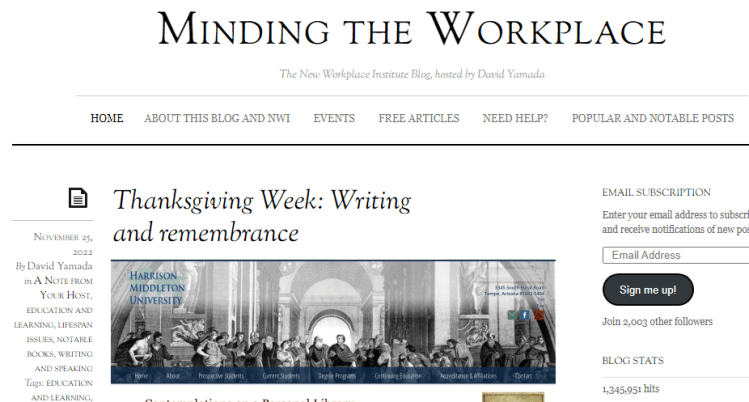
In this type of website the author’s expertise is reinforced by both content and style. Such mastery can be evidenced by fresh and well drafted narrative in the Minding the Workplace blog, or in the array of images linked to the dramatic story of a photographer’s trek around England in The Perimeter. The former is complemented by the author’s extensive academic bio shown in his LinkedIn profile, while that latter’s stunning photos of the English coast are repeated across highly visual social media platforms such as Instagram and Facebook. One easy way to show off mastery in your field or niche is to include a Page on Reference Links on your site, or to publish best practice tips in a categorized blog.
2. Layout Innovation
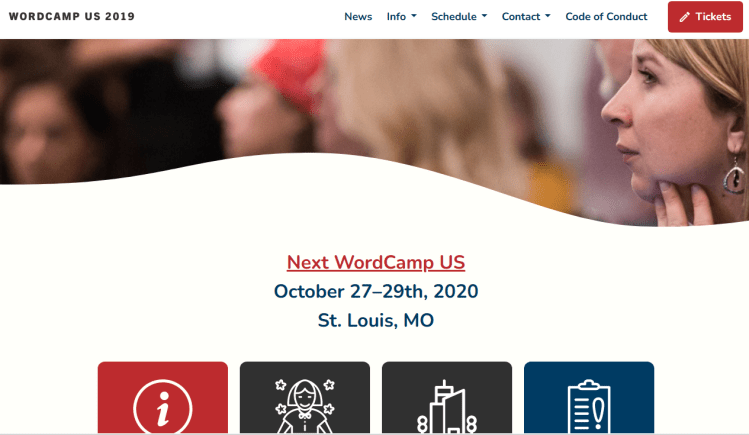
The WordPress.Org site for its 2019 National WordCamp in St. Louis combines basic squares, curves and boxes along with primary colors against a white background into a stylish site for the event. The Mighty Writers non-profit applies red as a signature color for titles and banners, combined with lively featured imagery about its programs helping disadvantaged youth to read and write in the Philadelphia area.

Healthy Schools Campaign in Chicago is another non-profit that uses green as its banner color, various wide-screen images of its activities, and a two column layout; the site also applies a consistent white box with black type to announce key messages on each page.
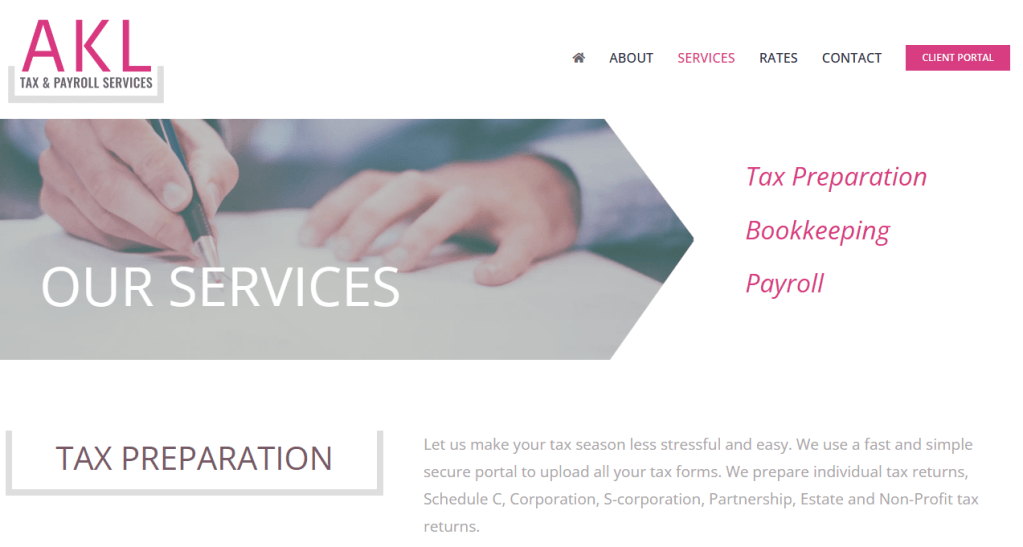
Lastly, and closer to home, a fellow GGCC Chamber member, AKL Tax and Payroll Services, employs red text against light grey, arrow-shaped blocks to convey a “soft-sell” presentation of accounting services — a refreshing contrast from the boring rendition of content by most accounting sites.
3. Personal Projection
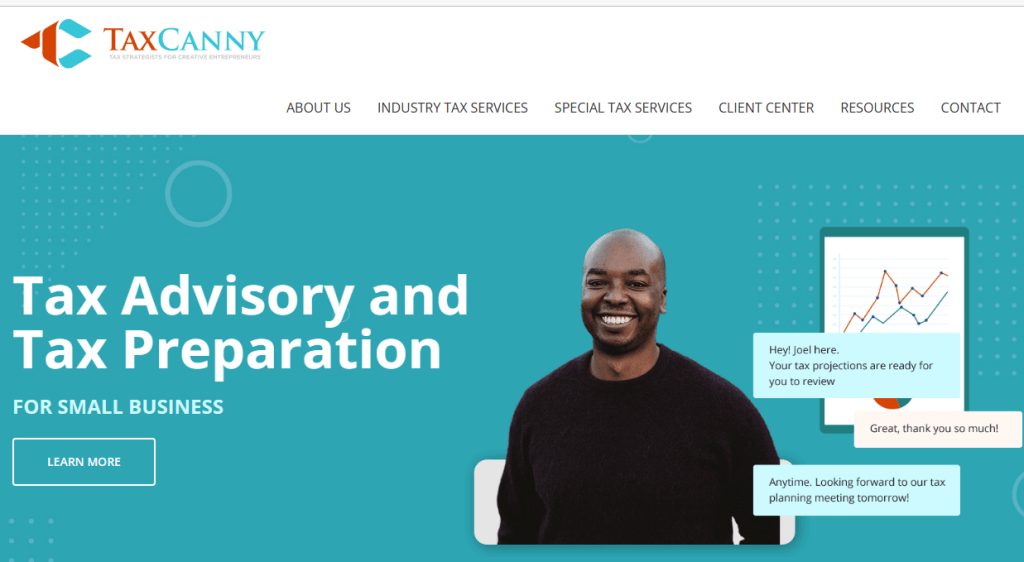
Many websites can look “plain vanilla”, generic, and too overly dependent on stock photos. DC area IT Government Contractors are often guilty in this regard. An easy way for a solopreneur to stand out, project competence and convey approachability is to use a combination of your personal photo (perhaps in various poses) along with specially tailored content and pricing. TaxCanny is one such example with photos of its founder, CPA Joel Lee. Hilary Schwab also personalizes her gardening blog in small cameo photos plus videos in Edible Gardening Girl. Personal photos are also a feature throughout Hilary’s professional photography site.
4. Branding Integration
A powerful way to express your Web presence is to integrate the site’s layout, imagery and logo into one branded message. One way to obtain such integration is to use public domain images from Wikipedia in such areas as history, architecture and the arts. One such example is the demo site for WP.ORG’s Twenty-Twentyone Theme which uses images and soft pastel colors from a 19th century French painter to convey a dream-like look and feel. Another example is the use of domain name and a sailing ship logo (plus archaic-looking Papyrus script) for my own consulting site, dcwebrevolution.com.
Your Style Investment!
Whichever style you choose, it will likely involve an investment in time and money to get the branding “look and feel” right for you, plus checks to optimize your site for Search through such elements as visual hierarchy, keywords and calls to action. Whether assembling ” fresh” a site design as part of a startup venture, or as a branding redesign for an existing organization, such online branding will likely pay rich dividends. A modern and coherent design can both heighten impact on your Web audience and serve as a more efficient central hub for managing and updating your online presence, not only throughout your website, but across your social media outreach as well.

